Click Here To Support Me

Click Here To Suport Me

Join The Community

Premium WordPress Themes

Saturday, December 10, 2011

scientific fact #61


what's next for nasa


"As a former astronaut and the current NASA Administrator, I'm here to tell you that American leadership in space will continue for at least the next half-century because we have laid the foundation for success -- and failure is not an option."
Charles Bolden, NASA Administrator
National Press Club, July 1, 2011
› View Speech Video | › Speech Text (82 KB PDF) The end of the space shuttle program does not mean the end of NASA, or even of NASA sending humans into space. NASA has a robust program of exploration, technology development and scientific research that will last for years to come. Here is what's next for NASA:


Exploration
NASA is designing and building the capabilities to send humans to explore the solar system, working toward a goal of landing humans on Mars. We will build the Multi-Purpose Crew Vehicle, based on the design for the Orion capsule, with a capacity to take four astronauts on 21-day missions. NASA is also moving forward with the development of the Space Launch System-- an advanced heavy-lift launch vehicle that will provide an entirely new national capability for human exploration beyond Earth's orbit. The SLS rocket will use a liquid hydrogen and liquid oxygen propulsion system, which will include shuttle engines for the core stage and the J-2X engine for the upper stage. We are developing the technologies we will need for human exploration of the solar system, including solar electric propulsion, refueling depots in orbit, radiation protection and high-reliability life support systems. International Space Station The International Space Station is the centerpiece of our human spaceflight activities in low Earth orbit. The ISS is fully staffed with a crew of six, and American astronauts will continue to live and work there in space 24 hours a day, 365 days a year. Part of the U.S. portion of the station has been designated as a national laboratory, and NASA is committed to using this unique resource for scientific research. The ISS is a test bed for exploration technologies such as autonomous refueling of spacecraft, advanced life support systems and human/robotic interfaces. Commercial companies are well on their way to providing cargo and crew flights to the ISS, allowing NASA to focus its attention on the next steps into our solar system. Aeronautics NASA is researching ways to design and build aircraft that are safer, more fuel-efficient, quieter, and environmentally responsible. We are also working to create traffic management systems that are safer, more efficient and more flexible. We are developing technologies that improve routing during flights and enable aircraft to climb to and descend from their cruising altitude without interruption. We believe it is possible to build an aircraft that uses less fuel, gives off fewer emissions, and is quieter, and we are working on the technologies to create that aircraft. NASA is also part of the government team that is working to develop the Next Generation Air Transportation System, or NextGen, to be in place by the year 2025. We will continue to validate new, complex aircraft and air traffic control systems to ensure that they meet extremely high safety levels. Science NASA is conducting an unprecedented array of missions that will seek new knowledge and understanding of Earth, the solar system and the universe. NASA has observatories in Earth orbit and deep space, spacecraft visiting the moon and other planetary bodies, and robotic landers, rovers, and sample return missions. NASA's science vision encompasses questions as practical as hurricane formation, as enticing as the prospect of lunar resources, and as profound as the origin of the Universe.

scientific fact #60


NASA Announces Launch Date and Milestones for Spacex Flight
WASHINGTON -- NASA has announced the launch target for Space Exploration Technologies' (SpaceX) second Commercial Orbital Transportation Services (COTS) demonstration flight will be Feb. 7, 2012, pending completion of final safety reviews, testing and verification. NASA also has agreed to allow SpaceX to send its Dragon spacecraft to rendezvous with the International Space Station (ISS) in a single flight. "SpaceX has made incredible progress over the last several months preparing Dragon for its mission to the space station," said William Gerstenmaier, NASA's associate administrator for the Human Exploration and Operations Mission Directorate. "We look forward to a successful mission, which will open up a new era in commercial cargo delivery for this international orbiting laboratory." Gerstenmaier said, "There is still a significant amount of critical work to be completed before launch, but the teams have a sound plan to complete it and are prepared for unexpected challenges. As with all launches, we will adjust the launch date as needed to gain sufficient understanding of test and analysis results to ensure safety and mission success." During the flight, Dragon will conduct a series of check-out procedures that will test and prove its systems in advance of the rendezvous with the station. The primary objectives for the flight include a fly-by of the space station at a distance of approximately two miles to validate the operation of sensors and flight systems necessary for a safe rendezvous and approach. The spacecraft also will demonstrate the capability to abort the rendezvous, if required. Dragon will perform the final approach to the ISS while the station crew grapples the vehicle with the station's robotic arm. The capsule will be berthed to the Earth-facing side of the Harmony node. At the end of the mission, the crew will reverse the process, detaching Dragon from the station for its return to Earth and splashdown in the Pacific off the coast of California. If the rendezvous and attachment to the station are not successful, SpaceX will complete a third demonstration flight in order to achieve these objectives as originally planned. "SpaceX is on the forefront of demonstrating how a partnership between the government and private industry can lead to new capabilities and provide a large return on investment," said Alan Lindenmoyer, program manager for COTS at NASA's Johnson Space Center in Houston. "SpaceX is excited to be the first commercial company in history to berth with the International Space Station. This mission will mark a historic milestone in the future of spaceflight," said SpaceX President Gwynne Shotwell. "We appreciate NASA's continued support and their partnership in this process." Begun in 2006, NASA's COTS program is investing financial and technical resources to stimulate efforts within the private sector to develop and demonstrate safe, reliable and cost-effective space transportation capabilities. In a multiphase strategy, the program is spurring the innovation and development of new spacecraft and launch vehicles from commercial industry, creating a new system of delivering cargo to low-Earth orbit and the International Space Station. Through Space Act Agreements, SpaceX will receive up to $396 million and Orbital Sciences Corporation, NASA's other COTS partner, will receive up to $288 million for the successful completion of all milestones in the agreements. To date, SpaceX has received $376 million for completing 36 out of 40 milestones and Orbital has received $261.5 million for completing 23 out of 29 milestones.

scientific fact #59


PASADENA, Calif., – Autonomous Exploration for Gathering Increased Science (AEGIS), novel autonomy software that has been operating on the Mars Exploration Rover Opportunity since December 2009, is NASA's 2011 Software of the Year recipient.

The AEGIS software, developed by NASA's Jet Propulsion Laboratory in Pasadena, Calif., autonomously directs Opportunity's cameras to interesting science targets. AEGIS was developed to enhance the usual targeting process involving scientists on the ground, which can require the rover to stay in the same place for a day or more while data are transmitted to Earth and targets are selected from preliminary images.

With AEGIS, the rover software analyzes images onboard, detects and prioritizes science targets in those images, and autonomously obtains novel, high-quality science data of the selected targets, within 45 minutes, with no communication back to Earth required. AEGIS chooses science targets based on pre-specified criteria set by the mission science team.

AEGIS can be used as soon as the rover reaches a new area and is especially beneficial during and after long drives. It enables high-quality data to be collected more often and in a significantly reduced time frame. The incorporation of AEGIS in the Mars Science Laboratory flight software is in progress, and it is also being considered for future NASA missions.

The AEGIS capability was developed as part of a larger autonomous science framework called OASIS (short for Onboard Autonomous Science Investigation System), which is designed to allow a rover to identify and react to serendipitous science opportunities. The AEGIS system takes advantage of the OASIS ability to detect and characterize interesting terrain features in rover images. This technology was created with assistance from NASA's Mars Exploration Rover Project and with funding from the New Millennium Program, the Mars Technology Program, the JPL Research and Technology Development Program, the JPL Interplanetary Network Development Program and the Intelligent Systems Program.

JPL is a division of the California Institute of Technology in Pasadena.


scientific fact


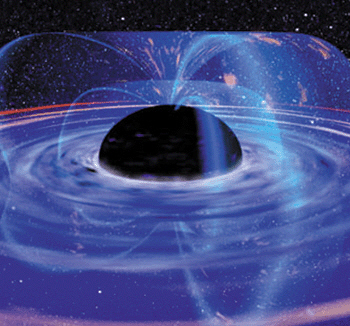
New details about the birth of a famous black hole that took place millions of years ago have been uncovered, thanks to a team of scientists who used data from NASA's Chandra X-ray Observatory as well as from radio, optical and other X-ray telescopes. Over three decades ago, Stephen Hawking placed -- and eventually lost -- a bet against the existence of a black hole in Cygnus X-1. Today, astronomers are confident the Cygnus X-1 system contains a black hole, and with these latest studies they have remarkably precise values of its mass, spin, and distance from Earth. With these key pieces of information, the history of the black hole has been reconstructed. "This new information gives us strong clues about how the black hole was born, what it weighed and how fast it was spinning," said author Mark Reid of the Harvard-Smithsonian Center for Astrophysics (CfA) in Cambridge, Mass. "This is exciting because not much is known about the birth of black holes." Reid led one of three papers -- all appearing in the November 10th issue of The Astrophysical Journal -- describing these new results on Cygnus X-1. The other papers were led by Jerome Orosz from San Diego State University and Lijun Gou, also from CfA. Cygnus X-1 is a so-called stellar-mass black hole, a class of black holes that comes from the collapse of a massive star. The black hole is in close orbit with a massive, blue companion star. Using X-ray data from Chandra, the Rossi X-ray Timing Explorer, and the Advanced Satellite for Cosmology and Astrophysics, a team of scientists was able to determine the spin of Cygnus X-1 with unprecedented accuracy, showing that the black hole is spinning at very close to its maximum rate. Its event horizon -- the point of no return for material falling towards a black hole -- is spinning around more than 800 times a second. An independent study that compared the evolutionary history of the companion star with theoretical models indicates that the black hole was born some 6 million years ago. In this relatively short time (in astronomical terms), the black hole could not have pulled in enough gas to ramp up its spin very much. The implication is that Cygnus X-1 was likely born spinning very quickly. Using optical observations of the companion star and its motion around its unseen companion, the team made the most precise determination ever for the mass of Cygnus X-1, of 14.8 times the mass of the Sun. It was likely to have been almost this massive at birth, because of lack of time for it to grow appreciably. "We now know that Cygnus X-1 is one of the most massive stellar black holes in the Galaxy," said Orosz. "And, it's spinning as fast as any black hole we've ever seen." Knowledge of the mass, spin and charge gives a complete description of a black hole, according to the so-called "No Hair" theorem. This theory postulates that all other information aside from these parameters is lost for eternity behind the event horizon. The charge for an astronomical black hole is expected to be almost zero, so only the mass and spin are needed. "It is amazing to me that we have a complete description of this asteroid-sized object that is thousands of light years away," said Gou. "This means astronomers have a more complete understanding of this black hole than any other in our Galaxy." The team also announced that they have made the most accurate distance estimate yet of Cygnus X-1 using the National Radio Observatory's Very Long Baseline Array (VLBA). The new distance is about 6,070 light years from Earth. This accurate distance was a crucial ingredient for making the precise mass and spin determinations. The radio observations also measured the motion of Cygnus X-1 through space, and this was combined with its measured velocity to give the three-dimensional velocity and position of the black hole. This work showed that Cygnus X-1 is moving very slowly with respect to the Milky Way, implying it did not receive a large "kick" at birth. This supports an earlier conjecture that Cygnus X-1 was not born in a supernova, but instead may have resulted from the dark collapse of a progenitor star without an explosion. The progenitor of Cygnus X-1 was likely an extremely massive star, which initially had a mass greater than about 100 times the sun before losing it in a vigorous stellar wind. In 1974, soon after Cygnus X-1 became a good candidate for a black hole, Stephen Hawking placed a bet with fellow astrophysicist Kip Thorne, a professor of theoretical physics at the California Institute of Technology, that Cygnus X-1 did not contain a black hole. This was treated as an insurance policy by Hawking, who had done a lot of work on black holes and general relativity. By 1990, however, much more work on Cygnus X-1 had strengthened the evidence for it being a black hole. With the help of family, nurses, and friends, Hawking broke into Thorne's office, found the framed bet, and conceded. "For forty years, Cygnus X-1 has been the iconic example of a black hole. However, despite Hawking's concession, I have never been completely convinced that it really does contain a black hole -- until now," said Thorne. "The data and modeling described in these three papers at last provide a completely definitive description of this binary system." NASA's Marshall Space Flight Center in Huntsville, Ala., manages the Chandra program for NASA's Science Mission Directorate in Washington. The Smithsonian Astrophysical Observatory controls Chandra's science and flight operations from Cambridge, Mass.

Sunday, November 27, 2011

Scientific facts55 Stars

When the Universe was created, it consisted almost entirely of the two lightest elements, hydrogen and helium. But, look around you for a moment. We're not floating around in a gaseous haze. Where did all the heavy stuff cluttering up your bedroom come from?

Almost all of it comes from stars, which are big balls of hydrogen and helium, bound together by gravity. Stars are so overwhelmingly, enormously large that pressure from the force of gravity fuses together the hydrogen molecules at their cores, forming helium and releasing enough energy to give you a sun burn even if you're 93 million miles away, like we are.

Once a star has fused all the hydrogen in its core into helium, the helium fuses into carbon, which in turn fuses into other heavier elements like neon and oxygen, all the way through peanut butter, ham, and bleu cheese, continuing up to iron. This takes millions or billions of years, depending on the size of the star, how enthusastic it is, and whether or not it's trying to impress young female stars in its galactic neighborhood.

This sounds pretty good, but the elements lighter than iron only make up about a quarter of the period table. Where does everything else come from? Once a star's core is converted to iron, the whole fusion thing abruptly stops working, and the star explodes, forming a supernova (Latin for, "I've had quite enough of this, thank you!") So much energy is released in a supernova that within one second, about half of the elements in the rest of the periodic table are created.

Monday, November 21, 2011

Scientific fact #51 Black hole

                                               BLACK HOLE
1...it is a great amount of matter packed into a very small area - think of a star ten times more massive than the earth squeezed into football,then it behave as black hole
2....powerful explosions can result when a black hole and a neutron star collide, producing another black hole
3....They produce high intensity   gamma ray bursts and X-rays.
4....It has very high gravitational force
5....an object in space so massive and dense that light could not escape.
 6.... Einstein's theory of general relativity, which showed that when a massive star dies, it leaves behind a small, dense remnant core. If the core's mass is more than about three times the mass of the Sun, the equations showed, the force of gravity overwhelms all other forces and produces a black hole.

Scientific fact #50 time machine

              STEPHEN HOWKING'S TIME MACHINE

A wormhole is a theoretical 'tunnel' or shortcut, predicted by Einstein's theory of relativity, that links two places in space-time - visualised above as the contours of a 3-D map, where negative energy pulls space and time into the mouth of a tunnel, emerging in another universe. They remain only hypothetical, as obviously nobody has ever seen one, but have been used in films as conduits for time travel - in Stargate (1994), for example, involving gated tunnels between universes, and in Time Bandits (1981), where their locations are shown on a celestial map
'Through the wormhole, the scientist can see himself as he was one minute ago


Scientific fact #49 earth magnetic field

                                    EARTH 
     in the middle of earth core the molten metal rotates with very high speed ,due to this a small current passes through earth core since a current carrying loop create a magnetic field same as inside the earth magnetic field create
1....due to earth magnetic field,the solar wind of sun does not come on the earth ion and high energy
2.....For the first time, antiprotons have been found in Earth's magnetic field

Sunday, November 20, 2011

Scientific fact #48 nasa


1....Did you know that the Cassini-Huygens Mission is an international collaboration between three space agencies and 17 nations contributed to building the spacecraft? More than 250 scientists worldwide will study the data collected.

2....When the Cassini-Huygens spacecraft arrives at Saturn, it will be traveling so fast that engineers will need to burn the spacecraft's engines for 97 minutes just to slow it down. If mission engineers don't do this, the spacecraft would keep on going, instead of entering the orbit around Saturn

Scientific fact #47 jupiter

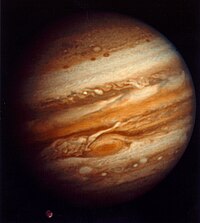
it's a small world. More than 1,000 Earths would fit into Jupiter's vast sphere